May 23, 2026
How Did Restaurants Get So Loud?
Recently a friend asked me to find a place in Winnipeg where we could sit and have a conversation about a sensitive topic. We needed privacy but also wanted to feel relaxed. I imagined a quiet cafe or restaurant, but not so quiet that other guests would be able to overhear our conversation.
It was hard to think of a place because so many of my normal spots can get noisy and don’t have great privacy. I finally found a family-run Vietnamese restaurant in Saint Boniface I’d never been to—–Le Colonial—–with review photos showing an acoustic tile ceiling and upholstered furniture. It was a good pick. The vibe was relaxed and calm and there were just enough other people dining there to add some ‘babble’ background noise, giving us the privacy we needed. The conversation went really well and I have the restaurant acoustics to thank.
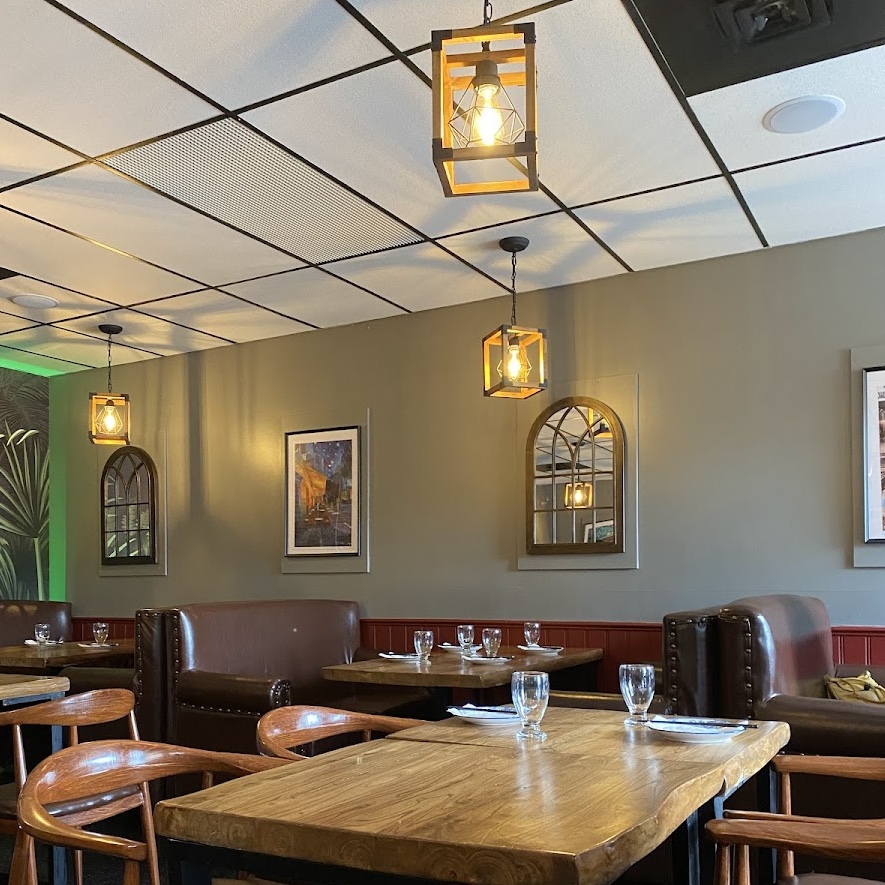
Le Colonial Restaurant, Winnipeg
The Rise of Loud Restaurants
Over the past couple of decades, cafes, restaurants, bars and breweries have been getting noisier and noisier. No wonder it was so hard for me to think of a place to go for quiet and privacy!
In some places, it’s by design. In New York City, for example, the price of real estate is so high that restaurants need to turn over tables as fast as possible, and one way of doing that is keeping the noise level high so diners can’t relax and instead just eat, pay and leave.
From Cosy to Chaotic
But even in cities with less real estate cost pressure, like Winnipeg, restaurants are getting noisier, not intentionally but because of evolving interior design trends.
For decades, you could walk into a restaurant anywhere in Canada or the US and bet that it would have an acoustical tile ceiling, a lightweight grid of mineral fiber tiles hung from the structural slab or roof above. Acoustical tile ceilings were ubiquitous because they were cheap, easy to install, provided a big cavity to hide HVAC ducts, sprinkler pipes and wiring out of sight, and of course, reduced the noise level in the restaurant. Many restaurants also had a carpet and upholstered seating, which absorbed additional sound.
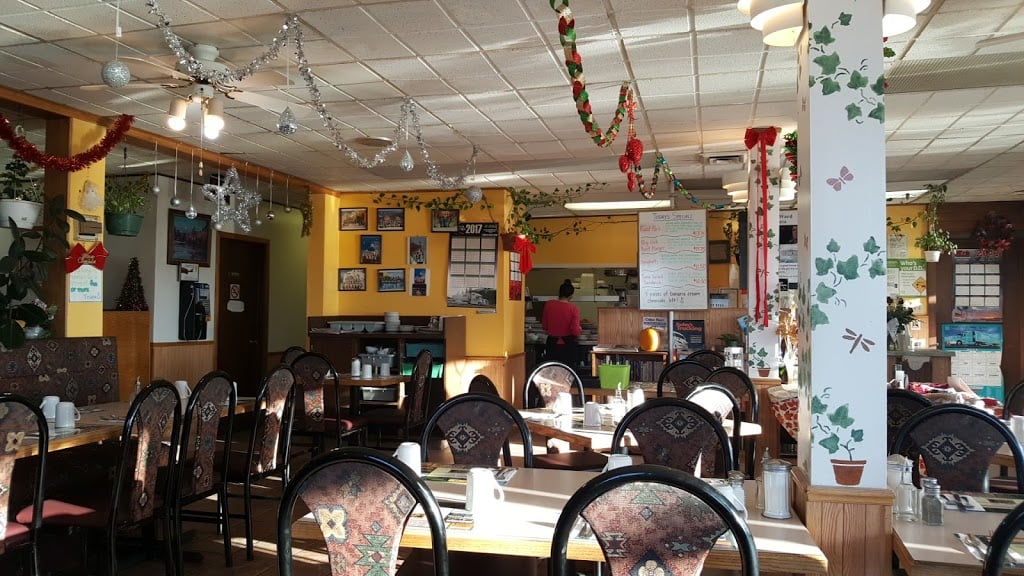
Oak Point Restaurant, Winnipeg
Some restaurants with this ‘classic’ look and feel still exist, their original design relatively untouched since opening day. When I took a day trip with my nephew to see the Narcisse Snake Dens, we stopped for lunch at Oak Point Restaurant (opened in 1977), and was delighted to find it full of lovingly maintained vintage furniture, with an acoustical tile ceiling spanning the whole space. My nephew has ADHD and finds it hard to sit still and focus on eating in loud restaurants so it was great to enjoy the calm and cosy environment together.
The Industrial Style
But acoustic tile ceilings, wall to wall carpet and booth seating fell out of fashion.
Loft living and the rise of post-industrial preservation and restoration made taller ceilings desirable and it became acceptable, even stylish, to expose ducts and conduit in the room. I lived in downtown NYC for ten years and watched as cosy, grungy dive bars, many of them with black-painted acoustic tile ceilings and beaten-up upholstered booths, closed down and were replaced by new bars with concrete, reclaimed wood and steel pipes forming the material palette. All of those materials are hard, dense and nonporous, reflecting sound waves back into the room where they build up into a reverberant cacophony.
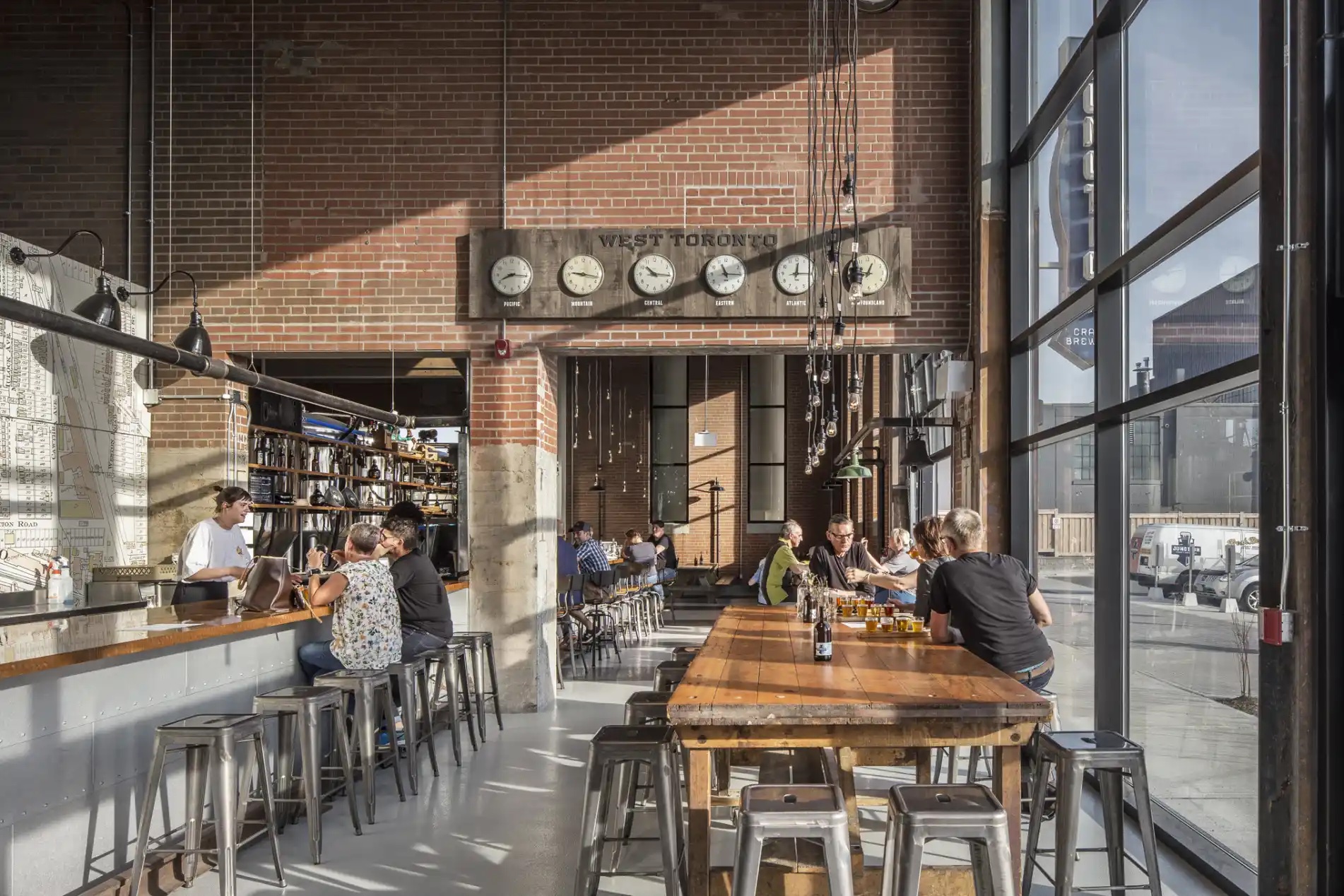
The Junction Craft Brewery, Toronto (photo: Steven Evans)
The industrial style has its roots in SoHo and Brooklyn in NYC but has spread around the world, including to places with no real industrial heritage.
Minimal Look, Maximal Sound
A parallel trend has been the rise of minimalism. Minimalism, with its clean lines and sparse furnishings (if there are furnishings at all), may be calm visually but can be chaotic sonically. Like the Industrial Style, Minimalism’s materials are hard and sound-reflecting, so sound energy simply builds up in the space. As a result, Minimalist cafes and restaurants can sound cold, echo-y and uninviting when there are just a few customers and chaotic when they become full of customers.
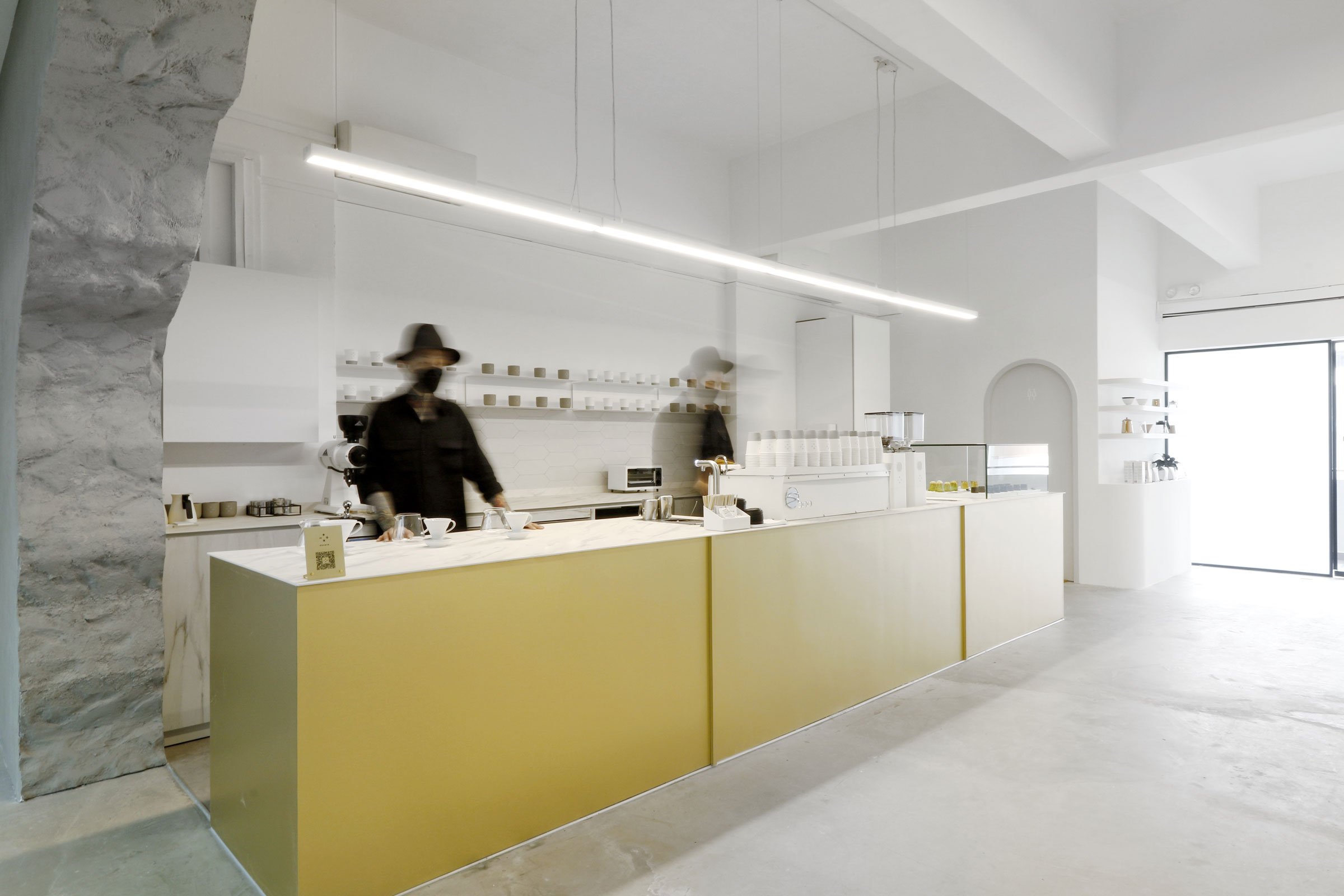
Equate Coffee, Singapore (photo: Equate Coffee)
Why Good Acoustics Matter in Restaurants, Cafes and Bars
A noisy restaurant might sound like success. A loud crowd signals a lot of customers. But too much noise can be a problem and there are lots of benefits to controlling the noise with good acoustical design: A calmer restaurant environment:
- Is more inclusive, providing a comfortable environment for people who are sensitive to noise (like my nephew) and people with hearing loss, including seniors.
- Reduces stress for wait staff.
- Improves communication between patrons and staff.
- Attracts loyal regulars.
- Has a more ‘premium’ feeling.
Another Local Shoutout
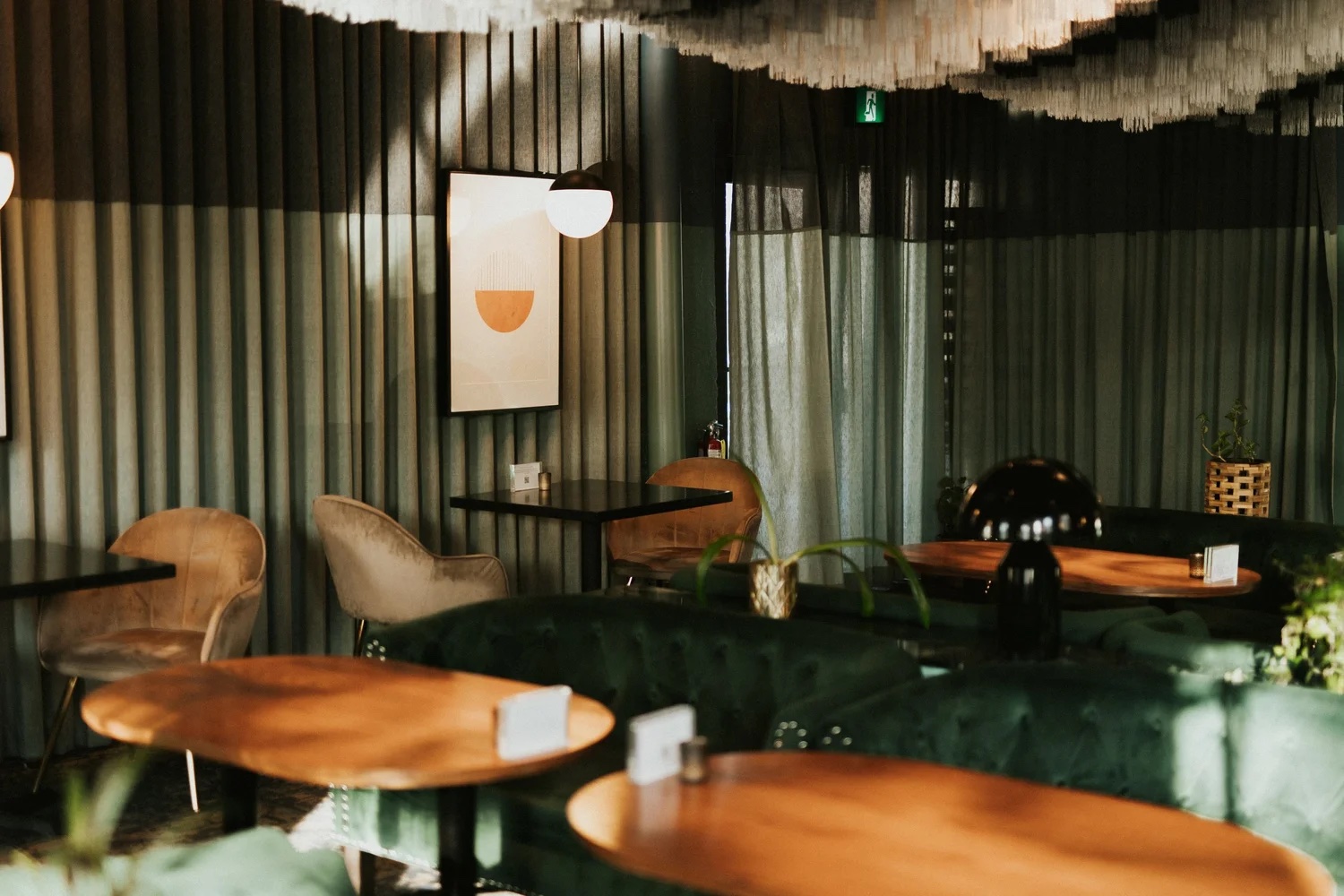
Nonsuch Brewing Co, Winnipeg (photo: Nonsuch Brewing Co)
As I was writing this entry, another Winnipeg restaurant came to mind for how good its sound environment is: Nonsuch Brewery in the Exchange District. I love going to Nonsuch on special occasions because it feels both lively and intimate. There’s a nice buzz when the restaurant is full but I can also have a quiet conversation and don’t have to raise my voice.
The good acoustics at Nonsuch are thanks to its unique interior design, which doesn’t slavishly follow one design trend or another but creatively combines elements of different styles: it has exposed ducts and metal pendant lamps reminiscent of the Industrial style, but it’s also full of retro chic textiles that absorb sound: wall-to-wall thin-pile carpet in the main dining room, big area rugs in the lounge, velour-upholstered seating and even curtains. Some of these elements are more effective at absorbing sound than others but together, they are effective at controlling the noise buildup and creating a cosy yet dynamic vibe.
How I can Help
Before the rise of Industrial and Minimalist design trends, restaurant, cafe and bar acoustics were just fine thanks to the ubiquitous acoustic tile ceiling. No acoustical design help was needed!
But today, it’s not obvious how to integrate sound-absorbing finishes into more contemporary design styles. I’ve seen lots of restaurants, cafes and bars rush to install acoustical materials after opening and the results can look clunky. Whether it’s thought about during the planning and design stage or fixed after opening, there will be questions of what type of product to add, where to locate it so that it’s actually effective, and how much of it to add.
I can help answer these questions. I care a lot about how an acoustical solution looks as well as how it sounds (not to mention how much it’s going to cost), and love collaborating with architects and interior designers to find a solution that enhances the overall experience in the space.
Get in touch with me to talk about your project!